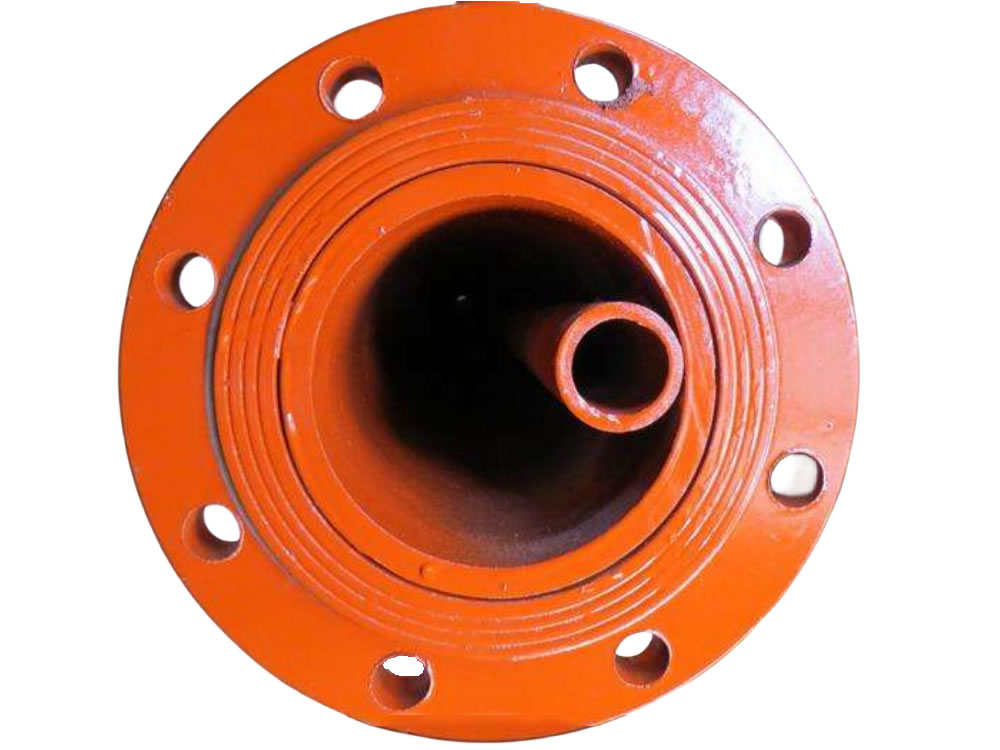
In industries such as mining, power generation, cement, and chemical processing, pipelines are constantly exposed to abrasive and corrosive materials.
In industries such as mining, power generation, cement, and chemical processing, pipelines are constantly exposed to abrasive and corrosive materials. To extend service life and reduce maintenance costs, lined pipes are widely used. Among the most popular options are ceramic lined pipes and basalt lined pipes. While both offer enhanced durability, they differ significantly in material properties, performance, and application suitability.
Ceramic Lined Pipe
Ceramic lined pipes typically use high-purity alumina (Al₂O₃) ceramics. These materials are engineered through advanced sintering processes, resulting in extremely dense and hard inner linings.
Basalt Lined Pipe
Basalt lined pipes are made from natural volcanic rock that is melted and cast into pipe linings. The material is then annealed to improve mechanical stability.
Ceramic linings are known for their exceptional hardness, often approaching that of diamonds on the Mohs scale. This makes them highly resistant to abrasion from particles like coal, ore, and ash.
Basalt linings also offer good wear resistance but are generally less hard compared to alumina ceramics. Over time, they may wear faster in high-impact or high-velocity conditions.
Verdict: Ceramic lined pipes provide superior wear resistance, especially in extreme environments.
Basalt has a more homogeneous structure derived from natural rock, which can offer decent resistance to moderate impact.
Ceramics, while extremely hard, can be more brittle if not properly engineered (though modern composite ceramic linings significantly improve toughness).
Verdict: Basalt may perform slightly better under moderate impact, but advanced ceramic composites can close this gap.
Ceramic materials can withstand very high temperatures, often exceeding 1000°C, without significant degradation.
Basalt linings also perform well at elevated temperatures but typically have lower maximum temperature limits compared to ceramics.
Verdict: Ceramic lined pipes are better suited for high-temperature applications.
Both ceramic and basalt materials exhibit excellent resistance to chemical corrosion, especially against acids and alkalis.
However, high-purity ceramics tend to have more stable chemical properties in highly aggressive environments.
Verdict: Both perform well, but ceramics have a slight advantage in extreme chemical conditions.
Ceramic lined pipes are often manufactured using techniques such as:
Basalt linings are typically cast and fitted into steel pipes.
Ceramic systems offer more flexibility in design and can be tailored for complex shapes and high-precision requirements.
Due to higher wear resistance, ceramic lined pipes usually have a longer service life, especially in severe abrasion environments.
Basalt lined pipes may require more frequent replacement or maintenance under similar conditions.
Basalt lined pipes are generally more affordable due to the use of natural materials and simpler production processes.
Ceramic lined pipes have a higher upfront cost but often deliver better long-term value due to reduced downtime and maintenance.
Ceramic Lined Pipes:
Basalt Lined Pipes:
Explore how ceramic lined pipe...
Discover how ceramic lined pip...
Operational Efficiency of Cera...